Michael Moussourakis
Vice President of Strategy


Michael Moussourakis is Vice President of Strategy at Alconox, LLC headquartered in White Plains, NY, responsible for Marketing and Technical Support, and Corporate Strategy. The Marketing and Technical Support teams provide cleaning related support, guidance, and product leadership to Alconox, LLC customers for their critical cleaning needs. They take great pride in ensuring Alconox, LLC’s products, procedures and information meet and exceed cleaning market requirements. He has over 25 years of experience in the biotech, pharmaceutical, medical device, and laboratory industries.
Through various and progressive roles in hands-on technical services, marketing, product management, commercial development, and corporate strategy, he has contributed to industry via publications, training, talks, and committee participation. Michael’s technical expertise covers critical cleaning, filtration, and process troubleshooting. Michael holds a BS and MS in Biomedical Engineering from the Columbia University School of Engineering and Applied Science.
DAY 1: May 28th, 2026
SESSION: CIP Detergents and pH: To Hazmat or not to Hazmat
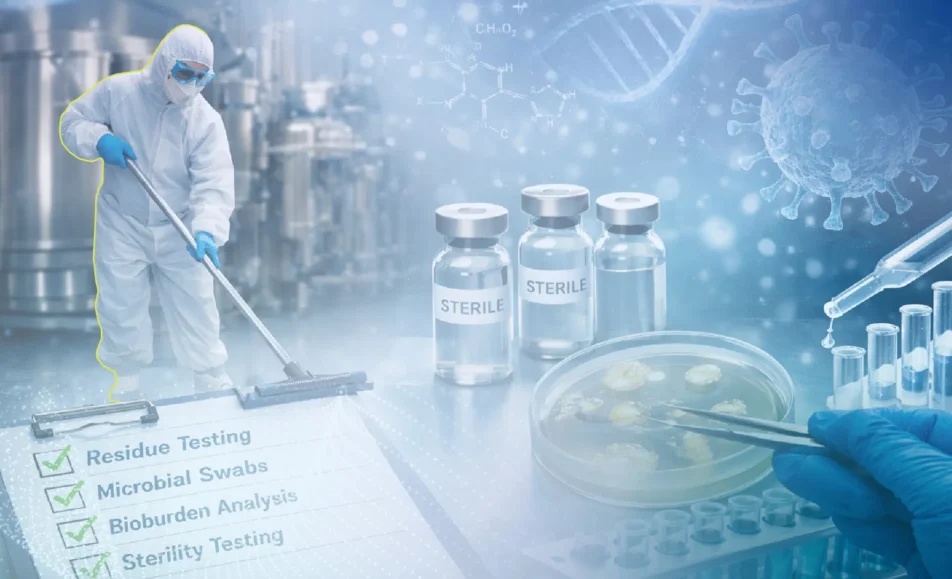
A review of general cleaning gen¬eral cleaning concepts, chemistry, and detergency. Aqueous detergent cleaning will be reviewed with a detailed focus on automated CIP (Clean-In-Place) cleaning methods, associated pros and cons, and the nature of such detergents. The types of surfactants, and related chemistries being used. The necessary pre and post cleaning steps, vital to any cleaning application are presented as a lifestyle ap¬proach. Their goal being to facilitate cleaning validation programs. This includes needs for focus on set up and procedures before cleaning steps are introduced, during the cleaning process itself, and methods for good prac-tice in post cleaning—long after the final rinse has been completed. Finally, a recent automated cleaning validation of a dermatological product is presented as a case study and reviewed. The requirements, results and procedure followed. The residue detection methods chosen for both residual product and detergent will be discussed.