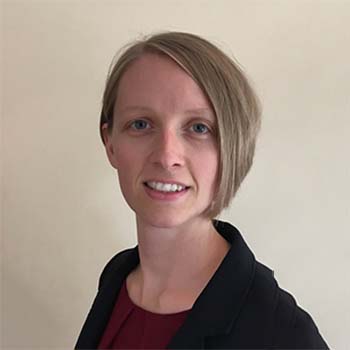
Dr. Stephanie Simon
Associate Scientific Director, Senior Toxicologist


Stephanie Simon is a molecular biologist and board certified toxicologist (ERT) with over 20 years of industry experience at Merck Healthcare KGaA in Darmstadt, Germany. She has a diploma degree in biology from the Technical University of Darmstadt and earned her PhD in Natural Sciences from the University of Heidelberg. Throughout her career at Merck, she has held multiple roles within the Department of Chemical and Preclinical Safety, spanning quality assurance, study direction and laboratory management, and several years leading the Genetic Toxicology group. In her current position as Senior Toxicologist within Chemical Toxicology, she has a particular focus on the risk assessment of impurities including nitrosamines and supports workplace safety and manufacturing processes by deriving health based exposure limits. She is recognized both internally and externally as an expert in genetic toxicology and nitrosamine assessment and actively contributes to national and international scientific working groups, including the HESI GTTC, ICH M7 or Lhasa’s data sharing initiatives. Additionally, she contributed to the USP Nitrosamine Conversations.

DAY 1: December 2nd, 2026
SESSION:
◆
◆
◆
DAY 2: December 3rd, 2021
SESSION: Current investigations of N-nitrosamines in the bacterial reverse mutation assay
◆ Induced rat liver S9 mix can activate short chain substituted N-nitrosamines exerting their mutagenic potential independent on the chain lengths.
◆ For methyl substitution, the preincubation protocol is recommended while with increasing chain length the plate incorporation protocol is favored.
◆ The bacterial reverse mutation assay can detect the mutagenic potential of short chain alkyl nitrosamines using OECD 471 recommendations.
◆ Salmonella strains TA100 and TA1535 and E. coli WP2 uvrA are sensitive to detect the mutagenicity of N-Nitrosamines.