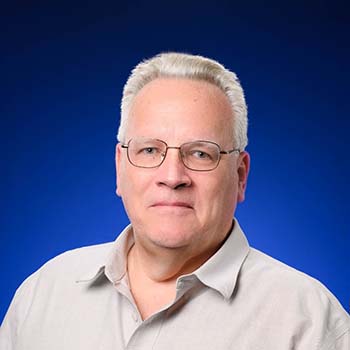
Andrew Walsh
President


Andrew Walsh is President of the Center for Pharmaceutical Cleaning Innovation (CPCI™) a not-for-profit research and educational organization and laboratory whose purpose is to support companies in the implementation of new ASTM Pharmaceutical Cleaning Standards. CPCI™ supports companies through research into new technologies (2 patents), educational offerings and internship opportunities for students. Andrew teaches a week long “hands-on” Cleaning SME class at CPCI™ and published a 400+ page textbook “Cleaning Validation: Science, Risk and Statistics-based Approaches” in 2022 to accompany the course.
Andrew has taught Cleaning Validation at the Temple University School of Pharmacy Regulatory Affairs and Quality Assurance Program since 2019. Andrew was also an Industry Professor from 2008 – 2015 in the Pharmaceutical Manufacturing and Engineering Graduate Program at Stevens Institute of Technology where he created and taught courses in Pharmaceutical Validation and Lean Six Sigma. While at Stevens, Andrew also founded and directed the Stevens Pharmaceutical Research Center (SPRC) from 2009 – 2015 which focused on Cleaning and Cleaning Validation topics.
Andrew is very active in developing industry consensus standards with ASTM International and has led teams that have written 9 Pharmaceutical cleaning standards.
Andrew has an M.S. in Biology (Microbiology) and is a certified Lean Six Sigma Black Belt and an Accredited Trainer.
DAY 1: May 28th, 2026
SESSION: Qualification of Operators and Inspectors for Visual Inspection following ASTM E3263
◆ What is ASTM E3263.
◆ EMA requirements for justifying Visual Inspection.
◆ Selection of Products and Materials of Construction for Visual Inspection studies.
◆ Using Attribute Agreement Analysis for Qualification.
◆ Automation of Qualification using Cell Phone APP.

DAY 2: September 30th, 2022
SESSION: Science and Risk-Based Cleaning Validation Using ASTM Standards
◆ Importance of ASTM Pharmaceutical Standards.
◆ Cleaning Process Development and Validation Standard.
◆ HBEL Standard.
◆ Visual Inspection Standard.
◆ The Quantitative Measurement of Risk using Toxicity, Process Capability and Detectability Scales.
◆ The Shirokizawa Matrix.